
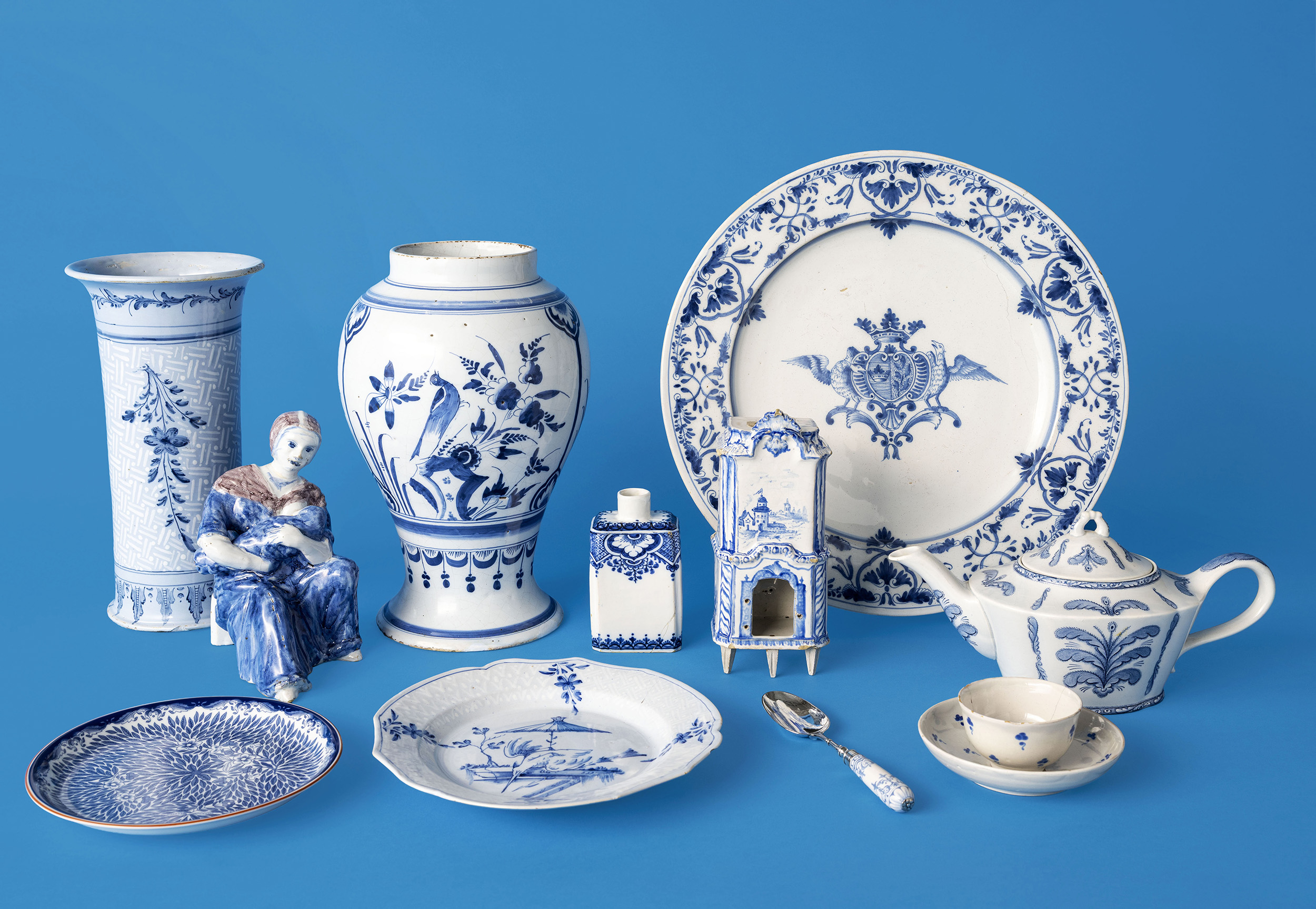
Sweden's oldest porcelain factory, Rörstrand, started in Stockholm in 1726 and moved to Gothenburg in 1926 and on to Lidköping in the 1930s. During the 18th century, earthenware production was part of the government's desire to develop the nation's industry and avoid expensive imports. Tax rules and other privileges provided the economic conditions. Artistic and economic guidance came from the Manufactory Office, which was important for Swedish factories and facilitated production. The exhibition, which runs from 13 June to 13 September, features faience objects from this period. They radiate liveliness and joy, reflecting the period's desire for form. The colour palette used by the important decorative painters was rich and seduced the market for most of the 18th century.
The unique artefacts collected by the National Museum over the past hundred years also provide examples of the 19th and 20th centuries' ambitions to reach out to a larger market at various world exhibitions. At Läckö Castle, earthenware, ceramics and porcelain signed by popular designers from the 20th and 21st centuries will be on display, all of which are associated with Rörstrand. Everything from Alf Wallander, Isaac Grünewald, Marianne Westman, Inger Persson, Gunnar Nylund, Signe Persson-Melin, Pia Törnell to Jonas Bohlin.
This is a glimpse into a fantastic history that ended in 2005 when production was discontinued at the factory in Lidköping. Rörstrand is an important part of Swedish design history and in the exhibition we get to see what has been collected in the national collection of design at the National Museum. A collection in constant development.
Welcome to a journey of discovery among known and unknown designers, with some objects on public display for the first time.
Exhibition Commissioner: Micael Ernstell, National Museum
Exhibition scenographer: Henrik Widenheim, National Museum